 blog
blog
Allergen Cross-Contamination in Restaurants: Prevention Guide
Table of Contents
- What Allergen Cross-Contamination Means in Food Service
- How Allergens Transfer in Restaurant Kitchens
- Food Allergy Procedures for Restaurants
- Restaurant Allergen Checklist for Daily Operations
- Allergen Cleaning Procedures to Eliminate Risk
- Food Allergy Order Communication with Customers
- Training Staff to Prevent Allergen Cross-Contamination
- Frequently Asked Questions
Last Updated: 10 October 2026
What Allergen Cross-Contamination Means in Food Service
Allergen cross-contamination in restaurants occurs when trace amounts of an allergen transfer from one food, surface, or utensil to another, exposing a customer with a food allergy to a substance they're trying to avoid. This happens unintentionally but can trigger severe allergic reactions, ranging from mild itching to anaphylaxis.
The risk is real. A customer ordering a peanut-free meal might still face exposure if the same chopping board used for a peanut dish is used for theirs without proper cleaning. Allergen cross contamination in restaurants occurs through shared fryers, contaminated sponges, or even flour dust in the air carrying allergens across your kitchen.
The stakes are high: allergic reactions can lead to hospital visits, lawsuits, and reputational damage. More importantly, your customers' safety depends on how seriously you take allergen cross-contamination in restaurants.
The good news is this is preventable. With clear procedures, proper training, and daily discipline, you can eliminate most cross-contamination risks. This guide walks you through exactly how.
How Allergens Transfer in Restaurant Kitchens
Allergens travel through your kitchen in predictable ways. Understanding these pathways is the first step to blocking them.
Direct contact is the most obvious route. If a knife touches peanuts, then touches another plate without washing, peanut protein transfers. Same with chopping boards, plates, and utensils. This is why dedicated equipment for allergen-free prep is essential.
Shared equipment amplifies risk. A fryer used for breaded items containing milk, then used for a "dairy-free" order without cleaning, contaminates the new dish. Grills, steamers, and food processors all pose similar risks.
Airborne particles are often overlooked. Flour dust, spice powder, and breadcrumb particles float through the air and settle on surfaces and food. A baker shaking flour near an allergen-free station can contaminate it without anyone noticing.
Hands and gloves are a major vector. A staff member handles an allergen-containing ingredient, then touches another dish or surface. Even wearing gloves doesn't help if those gloves aren't changed between tasks.
Cross-contact through condiments happens frequently. A spoon dipped into mayonnaise, then into a shared container, introduces allergens. Squeeze bottles are safer than shared utensils for this reason.
These transfer routes explain why allergen cross contamination in restaurants is so common, and why prevention requires more than good intentions. You need systems.
Food Allergy Procedures for Restaurants
Every restaurant needs written procedures that staff can follow consistently. These procedures should cover how orders are taken, how information flows to the kitchen, and how dishes are prepared.
Order-taking procedure: When a customer mentions an allergy, staff must flag it immediately. Use a consistent method, a special ticket colour, a written alert, or a kitchen display system notification. Never rely on verbal communication alone; written records prevent misunderstandings.
Kitchen protocol: Designate a single staff member to prepare allergen-free dishes. This person works at a clean station with dedicated equipment. They prepare that order before handling other food. This reduces the chance of mixing up plates or using contaminated tools.
Verification step: Before the dish leaves the kitchen, a second staff member checks it against the order. Did the customer request peanut-free? Confirm the dish contains no peanuts and no cross-contact risk. This double-check catches mistakes.
Customer communication: When serving, remind the customer what allergens have been avoided. This seems simple, but it confirms you've taken their request seriously and gives them a final chance to flag any concerns.
Documentation: Keep records of allergen requests and how they were handled. If a reaction occurs, these records help identify what went wrong and prevent future incidents.
Food allergy procedures for restaurants must be written, not assumed. Staff turnover is high in hospitality. New employees won't know your system unless it's documented and they're trained on it.
Restaurant Allergen Checklist for Daily Operations
Use this checklist each shift to ensure allergen safety measures are in place.
- Clean all food prep surfaces with hot soapy water before service
- Inspect chopping boards and utensils for damage or residue
- Check that dedicated allergen-free equipment is in place and accessible
- Verify glove supply is adequate; ensure staff know to change gloves between tasks
- Review the day's allergen orders with the kitchen team
- Confirm that staff assigned to allergen-free prep are on shift
- Test that the order system flags allergen requests visibly
- Check that condiments are in squeeze bottles, not shared spoons
- Inspect the fryer for debris from previous use
- Confirm cleaning supplies are stocked and accessible
- Review any new menu items for hidden allergens
- Brief staff on any customers with severe allergies dining that day
This restaurant allergen checklist takes 10 minutes at the start of each shift. Skipping it is how mistakes happen.
Allergen Cleaning Procedures to Eliminate Risk
Cleaning is where allergen cross-contamination in restaurants stops. Proper technique matters more than effort.
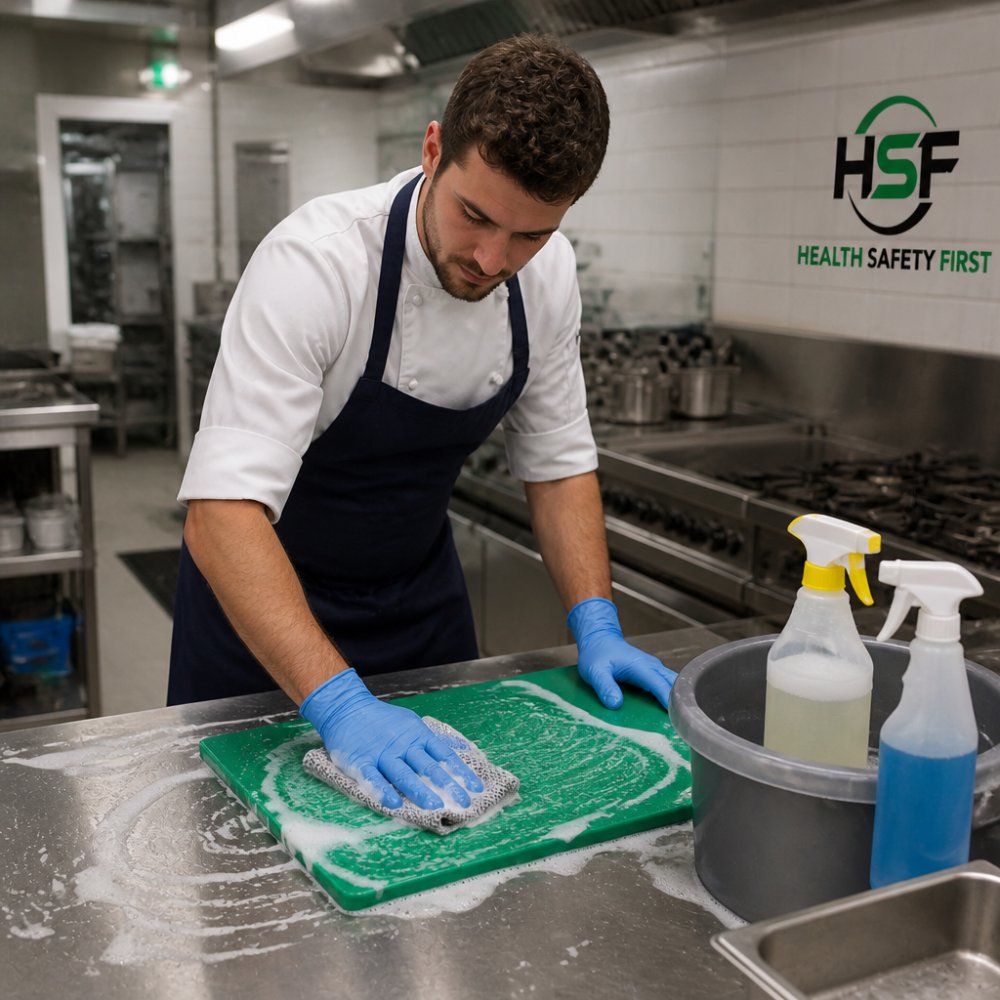
Hot water and soap are your primary tools. Hot water (at least 60°C for most allergens) plus detergent breaks down protein and fat, removing allergen residue. Cold water doesn't work; the allergen stays on the surface.
Chopping boards and utensils: Wash immediately after use with hot soapy water. Don't let them sit; dried residue is harder to remove. For high-risk allergens like peanuts, replace chopping boards rather than reusing them during a shift.
Shared equipment: Fryers, grills, and steamers need deep cleaning between allergen-containing and allergen-free prep. For fryers, change the oil or use a clean basket. For grills, scrape and wipe with a clean cloth. For steamers, run a full cycle with just water before the next use.
Surfaces and counters: Wipe down with hot soapy water and a clean cloth. Don't use the same cloth for multiple surfaces; bacteria and allergen particles transfer between areas. Change cloths frequently.
Sponges and cloths: These harbour allergens and bacteria. Replace sponges daily. Cloths should be washed in a hot wash after each shift. Better yet, use disposable cloths for allergen-sensitive prep.
Hands: Staff must wash hands thoroughly after handling allergens and before handling other food. Soap and warm water for at least 20 seconds removes most allergen proteins. Hand sanitiser alone doesn't remove allergens; it only kills bacteria.
Allergen cleaning procedures require discipline. A rushed wipe-down isn't enough. Build time into your shift for proper cleaning, it's not optional, it's essential.
Food Allergy Order Communication with Customers
Clear communication prevents mistakes. The customer knows their allergy; your job is to listen, confirm, and act.
At the point of order: Ask directly: "Do you have any food allergies?" Don't assume customers will volunteer this information. Some don't realise a mild reaction is an allergy. Others assume you'll know what's in your dishes.
Confirm understanding: Repeat back what they've told you. "You're allergic to shellfish, so I'll make sure your dish contains no shellfish and no cross-contact with shellfish." This confirms you've heard correctly and shows you take it seriously.
Explain your process: Tell customers how you'll handle their order. "We'll use a clean chopping board and dedicated utensils. A manager will double-check before it leaves the kitchen." Transparency builds trust.
Manage expectations: If you can't safely prepare an allergen-free dish, say so. It's better to turn away a customer than to serve them a meal that makes them ill. Some dishes (like those cooked in a shared fryer) carry unavoidable cross-contact risk.
Document in writing: Use your order system to flag allergies. Verbal notes fade; written records persist. Train staff to always write allergen requests on the kitchen ticket.
Follow up: After serving, check in. "How's your meal? Any concerns?" This gives customers a chance to flag issues and shows you care about their safety.
Food allergy order communication with customers is a conversation, not a checkbox. Take time. Answer questions. Show competence.
Training Staff to Prevent Allergen Cross-Contamination
Your staff are your first line of defence. They must understand why allergen protocols matter and how to follow them.
Induction training: Every new staff member should receive allergen training before their first shift. Cover what allergens are, why they're dangerous, and how cross-contamination happens. Use real examples from your menu.
Scenario practice: Walk through common situations. "A customer orders a gluten-free pasta. Walk me through how you'd prepare it." Listen for mistakes. Correct them immediately.
Refresher training: Allergen safety isn't a one-time lesson. Run brief refreshers monthly, especially after new menu items launch or after staff turnover.
Accountability: Make allergen safety part of your performance expectations. Staff who skip procedures should face consequences. Staff who catch mistakes should be praised.
Test knowledge: Ask staff questions during shifts. "What allergen is in our pesto?" "How do you clean the fryer?" Spot-checks catch gaps in understanding.
Lead by example: If management cuts corners on allergen procedures, staff will too. Follow the rules strictly. Your team watches.
Communicate incidents: If a customer reports a reaction or a near-miss, discuss it with your team. What went wrong? How do we prevent it next time? Learning from mistakes prevents future ones.
Training staff to prevent allergen cross-contamination in restaurants is ongoing work. Turnover is high. New staff arrive regularly. Make training a routine part of your operation.
Allergen safety isn't a compliance box to tick. It's a fundamental responsibility. Your customers trust you with their health. Slip-ups lead to hospital visits, legal liability, and lost business.
The UK Health, Safety & Fire Guide provides detailed checklists, training templates, and documented procedures. These tools help you build allergen safety into your daily workflow, so your team knows exactly what to do, every shift, without guessing.
Start with the checklist above. Audit your kitchen today. Identify where cross-contamination could happen. Close those gaps. Train your staff. Document your procedures. Your customers' safety, and your business's reputation, depends on it.
Frequently Asked Questions
What is allergen cross-contamination in a restaurant?
Allergen cross-contamination occurs when food containing an allergen comes into contact with allergen-free food, utensils, or surfaces, transferring allergen particles. This can happen through shared chopping boards, utensils, fryers, or even airborne particles. A customer with a severe food allergy can suffer a serious reaction from trace amounts, making prevention critical in food service operations.
How can restaurants prevent allergen cross-contamination?
Restaurants should implement dedicated allergen-free zones, use separate utensils and equipment for allergen-free meals, clean surfaces thoroughly between orders, and establish clear communication protocols between front and back of house. Staff must receive regular allergen training, and managers should maintain detailed allergen records for all menu items. A documented food allergy procedures system ensures consistency across all shifts.
What should a restaurant do if a dish may have been contaminated with an allergen?
Immediately discard the dish and do not serve it. Inform the customer of the contamination and offer to prepare a fresh meal following strict allergen-free protocols. Document the incident, investigate how the contamination occurred, and review your allergen cleaning procedures and staff practices to prevent recurrence. Transparency with customers builds trust and demonstrates your commitment to their safety.
How should restaurant staff handle an allergy order?
When a customer declares an allergy, staff must record it clearly and communicate it directly to kitchen management using a consistent system (verbal confirmation, written ticket, or kitchen display system alert). The kitchen should prepare the meal in a clean, allergen-free area using dedicated utensils. Before serving, a manager should verify the order meets allergen requirements. This structured food allergy order communication approach reduces errors and ensures accountability.