 how-to
7 Steps to Write a Food Safety Plan That Passes Inspection
Last Updated: October 26, 2026
Quick Summary
To write a food safety plan, you create a documented system that identifies potential hazards in your food business and describes the controls you'll use to prevent them. Your plan must be specific to your operation, covering your business type, hazard analysis, control measures, critical control points, monitoring procedures, staff training, and record-keeping.
- Identify your business type and which UK food safety regulations apply to your specific operation
- Conduct a hazard analysis covering biological, chemical, physical hazards and cross-contamination risks
- Document specific, measurable controls for each hazard and identify your critical control points
- Set up a system to record daily checks, temperatures, and corrective actions with clear responsibility
- Train every team member on the plan when they start and refresh training annually
Table of Contents
- What a Food Safety Plan Must Contain
- Step 1: Identify Your Business Type and Regulatory Requirements
- Step 2: Conduct a Food Safety Hazard Analysis
- Step 3: Use a Food Safety Plan Template to Structure Your Documentation
- Step 4: Document Your Controls and Critical Points
- Step 5: Set Up a Digital Food Safety Management System
- Step 6: Create a Food Safety Plan Example for Your Team
- Step 7: Review, Train, and Maintain Your Plan
- Frequently Asked Questions
What a Food Safety Plan Must Contain
When you write a food safety plan, you create a documented system that identifies potential hazards in your food business and describes the controls you'll use to prevent them. It's your proof that you're managing food safety properly.
To write a food safety plan effectively, you need to cover several key areas. First, identify what type of food business you run and which regulations apply to you. Second, document the hazards specific to your operations. Third, describe how you'll control those hazards at critical points. Fourth, explain how you'll monitor and verify your controls work. Finally, outline your staff training and record-keeping procedures.
The plan should be practical and specific to your business. A café's plan looks different from a catering operation's plan. Generic templates don't work, your plan must reflect what actually happens in your kitchen.
Step 1: Identify Your Business Type and Regulatory Requirements
Your first step is understanding which regulations govern your specific business. The type of food operation you run determines your compliance obligations.
Food businesses in the UK fall into different categories. A café serving hot drinks and simple food faces different requirements than a restaurant doing complex food preparation. A takeaway operation has different hazards than a sit-down venue. Catering businesses operating from temporary sites have their own rules. Understanding where you fit is essential before you can build a proper plan.
You need to understand food safety regulations in the UK to see which legal framework applies to you. The Food Standards Agency provides guidance for different business types. Your local environmental health team can also clarify which rules apply to your specific operation.
Document your business type, the food categories you handle, and the key regulations that affect you. This becomes the foundation of your plan. Write it down clearly so your team understands what applies to their work.
Step 2: Conduct a Food Safety Hazard Analysis
A hazard analysis identifies everything that could go wrong in your food preparation and service. This is where you spot the risks before they become problems.
Start by walking through your entire operation. Look at how you receive food, store it, prepare it, cook it, cool it, and serve it. At each stage, ask: What could contaminate this food? What could make it unsafe?
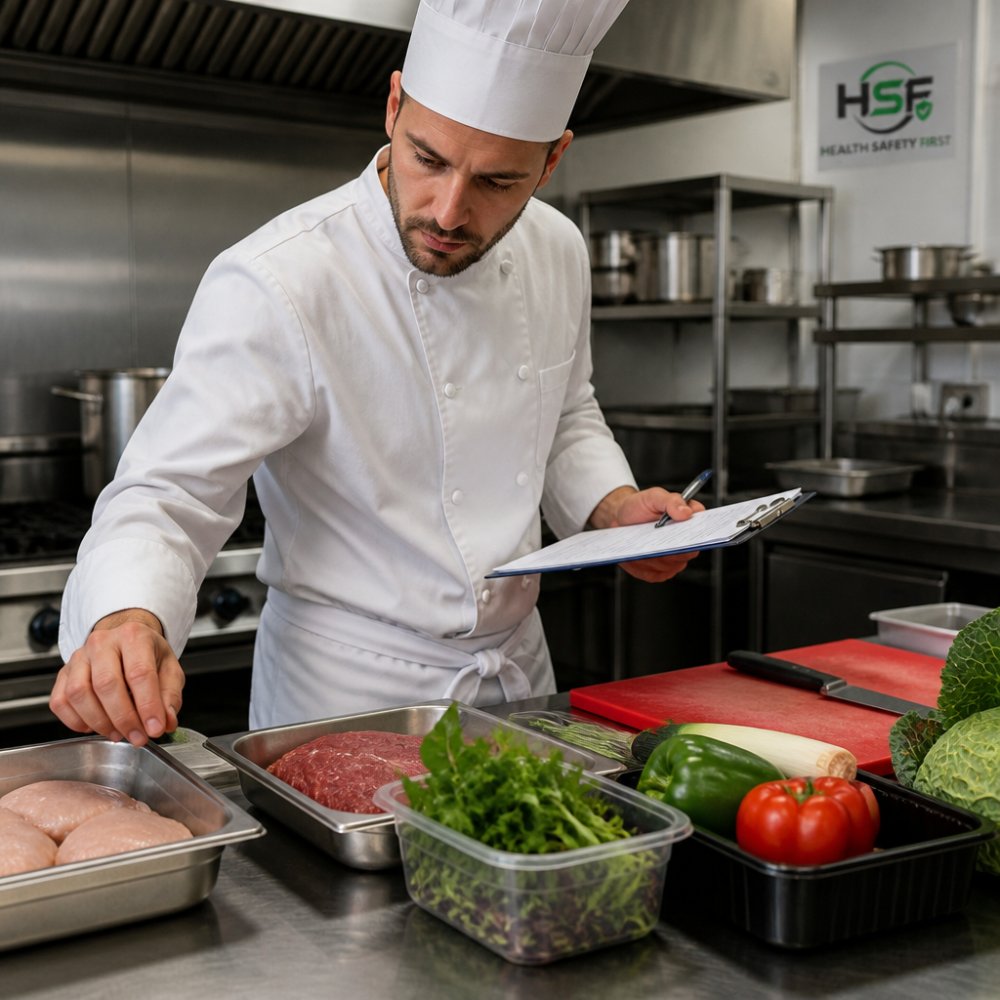
Common hazards include:
- Biological hazards (bacteria, viruses, allergens)
- Chemical hazards (cleaning products, pesticides)
- Physical hazards (glass, metal, plastic fragments)
- Cross-contamination from raw to ready-to-eat foods
- Improper temperature control during storage or cooking
You should also prevent allergen cross contamination in your kitchen by identifying where allergens enter your business and how they could contaminate other foods. Allergen control is a critical hazard that affects customer safety and your legal compliance.
Write down every hazard you identify. Don't filter or minimise, capture everything you observe. This list becomes the basis for your control measures.
Your hazard analysis should identify the main categories of risk that could affect your food business.
| Hazard type | Examples | Impact |
|---|---|---|
| Biological | Bacteria, viruses, allergens | Can contaminate food and cause illness |
| Chemical | Cleaning products, pesticides | Can poison food if not controlled |
| Physical | Glass, metal, plastic fragments | Can injure customers if ingested |
| Cross-contamination | Raw to ready-to-eat foods | Can spread bacteria and allergens |
| Temperature control | Improper storage or cooking | Can allow bacteria to multiply |
| Allergen exposure | Allergen cross contamination in kitchen | Affects customer safety and legal compliance |
Step 3: Use a Food Safety Plan Template to Structure Your Documentation
A template keeps your documentation consistent and ensures you don't miss anything important. It also makes training staff easier because everyone follows the same format.
Your template should include sections for:
- Business details and food categories
- Hazard analysis summary
- Control measures for each hazard
- Critical control points and monitoring procedures
- Corrective actions if something goes wrong
- Record-keeping and documentation
- Staff training requirements
- Review and update procedures
A good template is practical, not theoretical. It should ask for information your team actually uses day-to-day, not generic compliance language that sits in a drawer.
Many businesses find that a food safety plan template designed for their specific operation type saves time and improves compliance.
Keep your template simple enough that your team will actually use it. Complex documentation creates compliance theatre instead of real food safety.
Step 4: Document Your Controls and Critical Points
Once you've identified hazards, you need to describe how you'll control them. A control is any action, condition, or procedure that prevents, eliminates, or reduces a hazard to an acceptable level.
For each hazard, document:
- What you'll do to prevent or reduce it
- How often you'll check it's working
- Who's responsible for the control
- What records you'll keep
Critical control points (CCPs) are the most important controls. These are the steps where you can prevent a hazard or reduce it to a safe level. Cooking temperature is a CCP. Refrigerator temperature is a CCP. Allergen separation is a CCP.
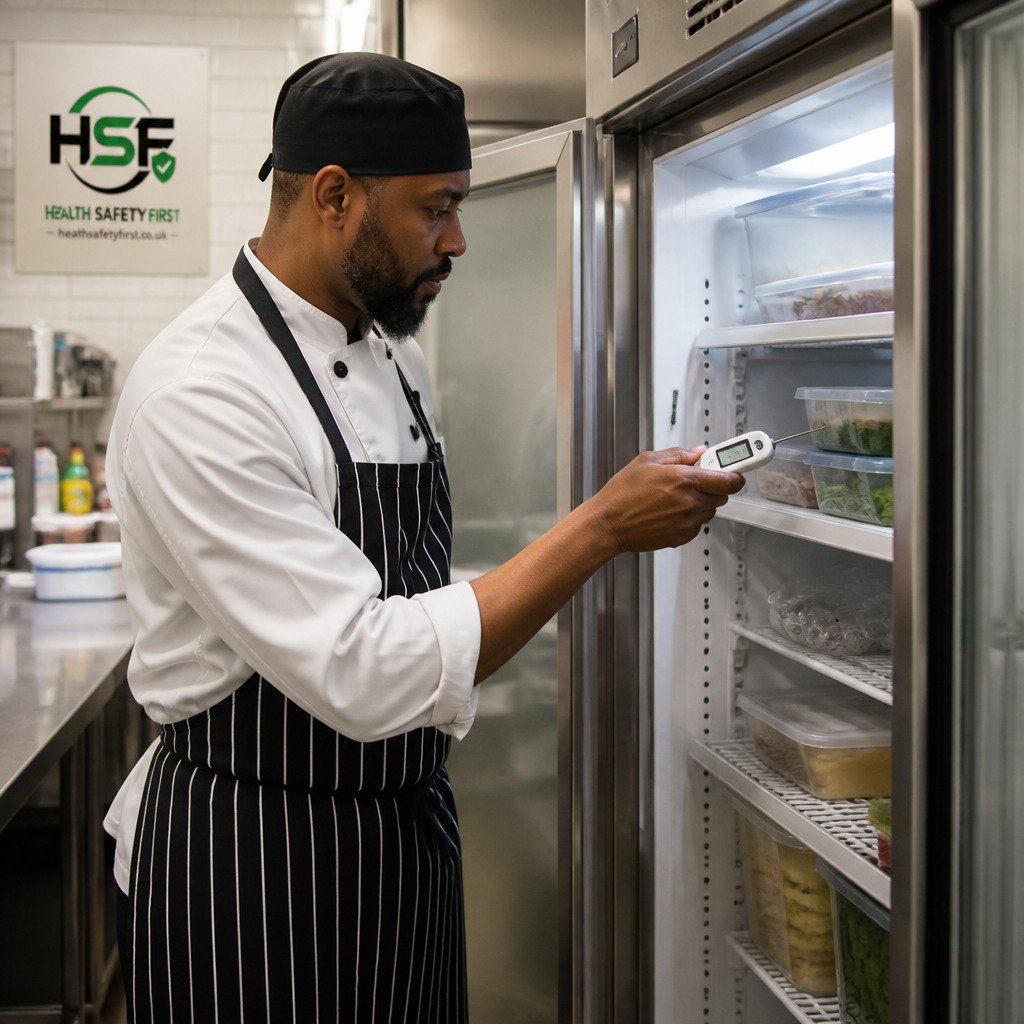
Your controls should be specific and measurable. "Keep food cold" isn't specific enough. "Maintain refrigerator temperature at 5°C or below, checked daily at 08:00 using a calibrated thermometer" is specific and measurable.
A food allergen checklist for restaurants helps you document specific controls for allergen hazards. Allergen control is one area where detailed documentation protects both your customers and your business.
Record what you're checking, when you're checking it, and who checked it. These records prove you're managing food safety actively, not just hoping for the best.
Step 5: Set Up a Digital Food Safety Management System
Digital systems can assist with food safety management. They can create automatic reminders, store records securely, and provide data on compliance patterns.
A digital system should allow you to:
- Log daily temperature checks automatically
- Receive alerts if temperatures drift outside safe ranges
- Record corrective actions when problems occur
- Schedule and track staff training completion
- Generate compliance reports for inspections
- Access records from multiple locations if you run several sites
Digital systems can help reduce human error. A staff member may be prompted to record a temperature check, and records can be stored securely.
Many businesses start with spreadsheets and graduate to dedicated food safety software as they grow. Choose a system that your team will actually use, the most sophisticated system is useless if staff skip logging because it's too complicated.
Your system should integrate with your business operations. If your team is already using a scheduling app or inventory system, a food safety tool that connects to those systems can help reduce duplicate data entry.
Step 6: Create a Food Safety Plan Example for Your Team
Your team needs to understand how your plan works in practice. An example shows them what good compliance looks like in their actual work.
Walk through a real scenario. For example: "When we receive raw chicken, here's what happens: the delivery driver hands over the boxes, we check the temperature is below 5°C, we inspect for damage, we record the delivery details and temperature in the system, and we place it immediately in the walk-in fridge. If the temperature is above 5°C, we reject the delivery and contact the supplier."
This example is concrete. It shows a real task, the specific checks involved, and what happens if something's wrong. Your team can picture themselves doing this work.
Create examples for your most critical processes:
- Receiving and storing raw foods
- Thawing procedures
- Cooking and cooling
- Serving and holding temperatures
- Cleaning and sanitising
- Allergen handling
When you train restaurant staff on food allergens, use examples from your actual menu and your actual kitchen. Generic training doesn't stick. Specific examples that match your team's daily work do.
Share these examples during staff induction and refresher training. Review them when you update your plan. Use them to troubleshoot when something goes wrong.
Step 7: Review, Train, and Maintain Your Plan
A food safety plan isn't a document you write once and file away. It needs regular review and active communication with your team.
Review your plan at least annually. Check whether:
- Your hazard analysis still covers current operations
- Your controls are working as intended
- Your team is following procedures consistently
- Changes in your menu or processes need new controls
- Your records show any patterns of problems
Train every team member on the food safety plan when they start. Cover the hazards relevant to their role, the controls they're responsible for, and the records they need to keep. Make training practical, show them how to use the system, not just talk about it.
Refresh training annually and whenever you update your plan. Food safety isn't a one-time induction topic. It needs regular reinforcement.
Document your training. Record who attended, when, and what was covered. This record proves you've trained your team if an inspector asks.
When something goes wrong, a temperature reading is too high, a supplier delivers unsafe food, use it as a learning moment. Review what happened, why your controls didn't catch it, and what you'll change. This is how your plan improves over time.
Writing a food safety plan that actually works means documenting your specific hazards, controls, and responsibilities. Your plan protects your customers, demonstrates compliance to inspectors, and gives your team clear guidance on food safety. Start with your business type and hazard analysis, use a template to stay organised, and maintain your plan through regular review and staff training. The effort you invest in a practical, specific plan can contribute to customer safety and regulatory confidence.
Frequently Asked Questions
What should a food safety plan include?
A food safety plan must detail your business structure, identify food safety hazards, describe control measures at critical points, set monitoring procedures, and outline corrective actions. It should also include cleaning schedules, staff training records, supplier information, and a system for reviewing and updating the plan. The specific content depends on your business type, a café requires different controls than a catering operation, but all plans must demonstrate how you prevent, eliminate, or reduce hazards to acceptable levels.
What is the difference between a food safety plan and a HACCP plan?
A food safety plan is a broad document covering all aspects of food safety management, including premises, equipment, staff hygiene, and supplier controls. HACCP (Hazard Analysis and Critical Control Points) is a specific methodology within that plan. Most UK food businesses use HACCP principles as the foundation of their food safety plan. Larger operations often have a formal HACCP plan as a detailed section; smaller businesses may use simplified HACCP-based approaches. Both must be documented and regularly reviewed.
How often should a food safety plan be reviewed?
Review your plan at least annually, or whenever your business changes, new menu items, different suppliers, new premises, or staff turnover. You must also review after any food safety incident, customer complaint, or failed inspection. A digital food safety management system can assist with tracking reviews and changes.
Who is responsible for writing a food safety plan?
The business owner or operator is legally responsible for ensuring a food safety plan exists and is followed. In practice, a food safety manager, head chef, or supervisor often writes and maintains it. All staff who handle food must understand their role in the plan. For small independent businesses, the owner typically writes it with input from key staff; larger chains assign this to a dedicated food safety manager. Whoever writes it must have knowledge of food safety principles and your specific business operations.