 how-to
How to Train Managers on a Food Safety Management System
Last Updated: October 28, 2026
Quick Summary
A food safety management system is the set of written procedures, checks and records that keeps food safe from delivery to service. Managers train staff on it and check that it is followed, using HACCP principles, monitoring and simple logs.
- Every UK food business must have a documented food safety management system based on HACCP principles.
- Managers own four areas: hazard identification, controls, monitoring and records.
- HACCP training should use your own kitchen's processes, walking the flow from goods-in to service.
- Check allergen information for every dish and keep it current for staff.
- Run a monthly audit with a checklist and close out last month's corrective actions.
Table of Contents
- What a Food Safety Management System Covers for Managers
- Food Safety Management System Examples for Small Cafés and Restaurants
- Setting Up HACCP Training for Managers
- Food Safety Training Topics for Staff to Cover
- Running a Food Safety Audit Checklist Each Month
- Keeping Records and Checking Staff Follow Procedures
- Booking Your Manager Training Session Next
- Frequently Asked Questions
What a Food Safety Management System Covers for Managers
A food safety management system is the set of written procedures, checks and records that keeps food safe from delivery to service. For managers, it is the operating system of the kitchen. It tells your team what to do, when to do it, and how to prove it was done.
In the UK, the legal backbone is food hygiene law set out by the Food Safety Act 1990 and the Food Hygiene (England) Regulations 2013, with equivalents in Scotland, Wales and Northern Ireland. Every food business must have a documented food safety management system based on HACCP principles, and managers are expected to run it. Check the current rules on the Food Standards Agency's food business guidance before you write yours.
Most systems cover four areas:
- Hazard identification: where things can go wrong, such as raw meat storage or cooling cooked rice
- Controls: the steps that stop each hazard, such as fridge temperatures and cooking times
- Monitoring: who checks what, and how often
- Records: the logs that show the checks happened
Managers own all four. You do not need to write every page yourself, but you must make sure the system matches what really happens on the pass.
Food Safety Management System Examples for Small Cafés and Restaurants
A practical example might look like this:
-
Deliveries: check temperature on chilled goods, reject anything out of range, log the result
-
Cooking: core temperature checked and logged for high-risk dishes
-
Cleaning: a simple daily and weekly schedule with initials against each task
The key is consistency.
Setting Up HACCP Training for Managers
HACCP stands for Hazard Analysis and Critical Control Points. It is a method for spotting food safety risks before they cause harm. Managers need to understand it well enough to run it, not just recite it.
A sound HACCP training session for managers should cover:
- The seven HACCP principles and how they apply to your menu
- How to draw a simple process flow for each dish or product
- How to set critical limits, such as cooking and cooling temperatures
- How to choose monitoring methods and corrective actions
- How to review the system when the menu or equipment changes
Run the session using your own kitchen's processes. Walk the flow from goods-in to service. Abstract training fades fast. Real examples stick.
Food Safety Training Topics for Staff to Cover
Managers train the team, so the topics matter. Focus on what staff handle every shift. For a step-by-step approach, see our guide to training restaurant staff on food allergens.
Allergens, Temperature Control and Hygiene
Allergens are a serious risk and a legal duty. Staff should know the 14 major allergens and how to prevent cross-contamination. Our Natasha's Law checklist for small businesses sets out the PPDS labelling and training requirements to confirm.
Cover these points with your team:
-
Keep allergen information up to date for every dish
-
Use separate utensils and boards for allergen-free orders
-
Store raw and ready-to-eat foods apart
-
Wash hands properly and often, and exclude staff with sickness symptoms
Check the detail for your own menu against the Food Standards Agency allergen guidance.
The table below summarises the core allergen, temperature and hygiene points managers should cover with their team.
| Topic | Action | Note |
|---|---|---|
| Allergens | Keep allergen information up to date | Covers the 14 major allergens |
| Allergens | Use separate utensils and boards | For allergen-free orders |
| Temperature control | Store raw and ready-to-eat foods apart | Prevents cross-contamination |
| Hygiene | Wash hands properly and often | Exclude staff with sickness symptoms |
Running a Food Safety Audit Checklist Each Month
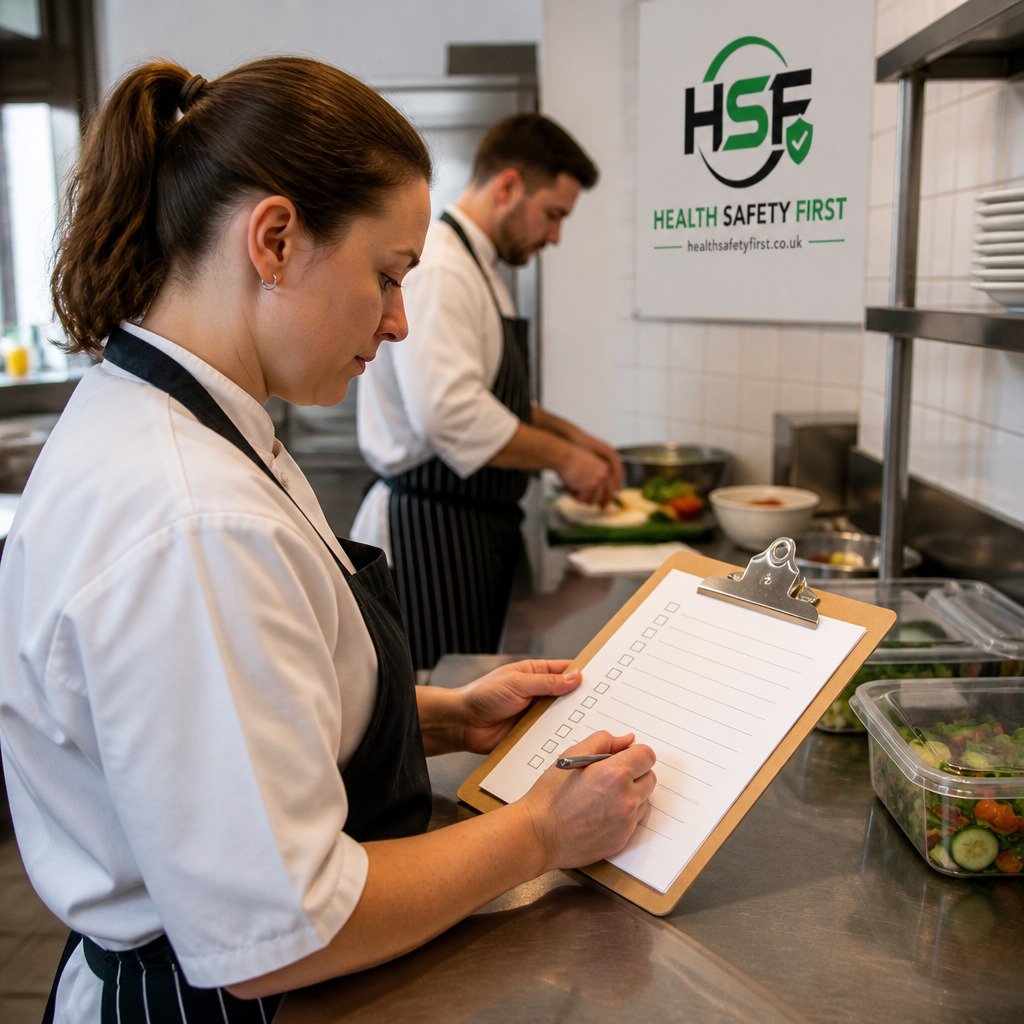
Walk the kitchen with a checklist and look at the real conditions, not the paperwork alone.
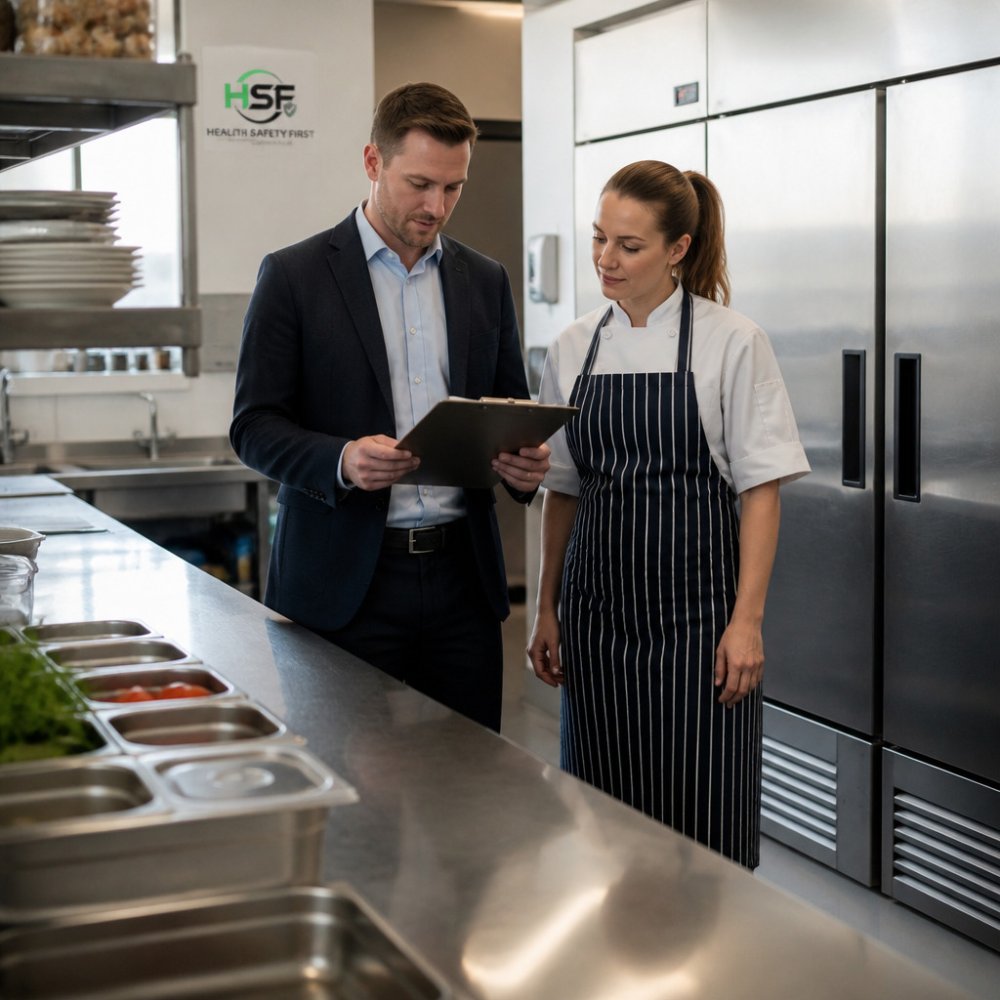
A useful monthly audit checklist includes:
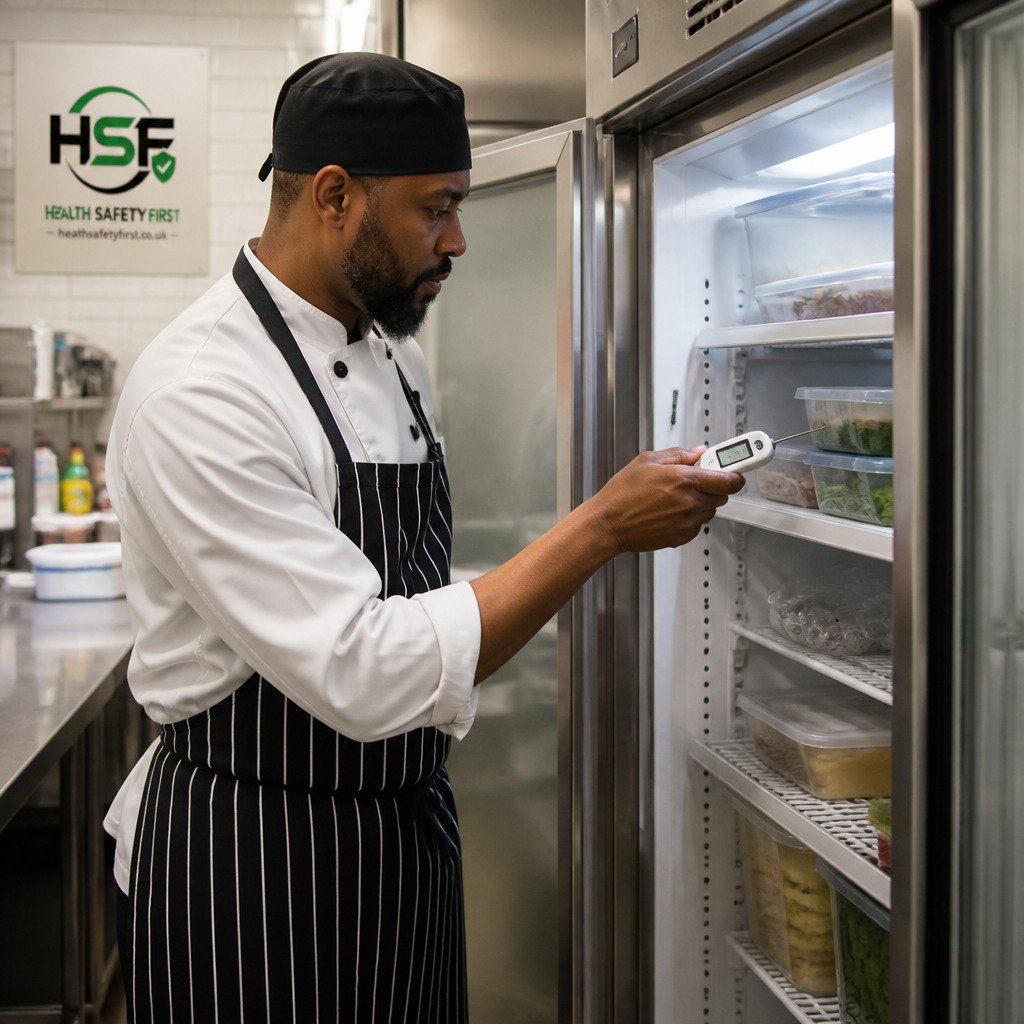
- Fridge and freezer temperatures in range and logged
- Allergen information matches the current menu
- Cleaning schedule completed and signed off
- Pest control records up to date
- Staff training records current
- Corrective actions from last month closed out
When you find a problem, fix it on the spot where you can, then record what went wrong and what you changed. Audit findings are your best guide to where training is needed next.
Keeping Records and Checking Staff Follow Procedures
Keep logs simple, dated and signed, and store them where staff can reach them during service.
Managers should spot-check that procedures are followed, not just that logs are filled in. Watch a fridge check happen. Ask a team member to explain the allergen process for a dish. If the answer is vague, retrain.
To make records easy, many managers use an allergen matrix. It shows every dish against the 14 major allergens, so staff can answer customer questions quickly and accurately. A Food Standards Agency allergen matrix guidance can help you set one up.
Planning to build your own matrix? Our allergen matrix template for restaurants gives you a ready-made starting point to fill in for each dish.
Managers also have a legal duty to protect staff. Under the Health and Safety at Work etc. Act 1974, employees must follow safety procedures and report hazards, and employers must provide the training and systems to make that possible. If you want to see how these duties fit together, our employee responsibilities under the Health and Safety at Work Act 1974 guide sets them out clearly.
Booking Your Manager Training Session Next
Pick one area to train first, such as allergens or HACCP basics, and schedule a 60-minute session this month. Use your own menu and kitchen layout so the training feels relevant. Then book a short follow-up audit four weeks later to check that the new routine is sticking.
Start with the training, run your first audit, and build from there.
Frequently Asked Questions
What should food safety management system training for managers cover?
Manager training can cover hazard identification, HACCP principles, allergen handling, cleaning schedules and record-keeping.
How often should food safety training be refreshed?
There is no fixed interval set in UK law, but a sensible approach is to refresh manager training at least annually and whenever there is a significant change, such as a new menu, new equipment, a change of premises, or a poor inspection result. Staff refresher sessions can be shorter and tied to shift briefings. Record each session so you can show an environmental health officer that training is ongoing rather than a one-off event.
How can managers check whether staff are following food safety procedures?
Compare what staff actually do against your written procedures and correct gaps on the spot.