 how-to
Is your business ready for Natasha's Law?
Last Updated: 26 October 2026
Quick Summary
A Natasha's Law checklist for small businesses helps you identify prepacked foods requiring labels, verify ingredients and allergens from suppliers, create consistent labelling templates, and train staff on allergen procedures and cross-contamination prevention.
- Identify all PPDS products your business packages and sells directly to customers.
- Ensure labels highlight all 14 major allergens and include your business name and address.
- Train staff on allergen information, labelling procedures, and cross-contamination prevention.
- Check supplier labels to verify ingredients and allergens in all bought-in items.
- Review and update labels whenever recipes or suppliers change.
Table of Contents
- What Natasha's Law requires from small food businesses
- Understanding PPDS food labelling requirements
- Using a PPDS allergen label template for consistent compliance
- Common PPDS food examples and how to label them
- Natasha's Law staff training: what your team needs to know
- Your Natasha's Law compliance checklist
- Implementing your compliance system today
- Frequently Asked Questions
What Natasha's Law requires from small food businesses
Natasha's Law checklist helps food businesses understand food labelling requirements. For small businesses, this means checking which products need clear labelling.
Check the applicable requirements with the relevant official food safety authority.
The Natasha's Law checklist for small businesses is a resource for considering food labelling and allergen procedures.
Understanding PPDS food labelling requirements
PPDS stands for "prepacked for direct sale". Check official guidance to determine which foods fall within this category.
Check official guidance for the labelling requirements that apply to PPDS food. You can find detailed guidance on how to label prepacked food for sale to meet these requirements.
- Celery
- Cereals containing gluten (wheat, barley, oats, rye)
- Crustaceans (prawns, crab, lobster)
- Eggs
- Fish
- Lupin
- Milk
- Molluscs (mussels, clams, snails)
- Mustard
- Nuts (almonds, hazelnuts, walnuts, cashews, pecans, pistachios, Brazil nuts, macadamia)
- Peanuts
- Sesame
- Soya
- Sulphites
Check official guidance for how ingredient and allergen information should be presented on labels.
Food Standards Agency guidance on PPDS labelling
Check official guidance for the information required on the label and how to handle uncertainty about ingredients.
Using a PPDS allergen label template for consistent compliance
A template can help organise labelling information. You can create one in Word or use a spreadsheet to track ingredients and allergens for each product.
A template could include fields such as:
- Product name
- Ingredients (full list)
- Allergens present (highlighted)
- May contain statement (if cross-contamination is possible)
- Business name and address
- Date prepared
Check official guidance for requirements on label format and legibility.
How to Label Prepacked Food for Sale: UK Guide
Common PPDS food examples and how to label them
For a tuna and mayonnaise sandwich, check the ingredients and applicable allergen information for each component, including shop-bought mayonnaise.
Check official guidance to determine whether a salad box falls within PPDS requirements and how to communicate allergen information.
For cakes and baked goods, check the ingredients of each component, including shop-bought chocolate, and consult official guidance on applicable labelling requirements.
For soup, check the ingredients of each component, including stock and thickening agents, and consult official guidance on applicable labelling requirements.
For prepared meals, check the ingredients of each component and consult official guidance on applicable labelling requirements.
Check official guidance to determine which products require labelling and what information must be provided.
Natasha's Law staff training: what your team needs to know
Staff can be briefed on allergen information, cross-contamination prevention, and labelling procedures.
Staff can be familiarised with allergens and the ingredients used in the business's products.
Cross-contamination can occur when allergen-containing food or ingredients come into contact with other food. Consult official guidance for appropriate controls.
How to Train Restaurant Staff on Food Allergens
Staff can be briefed on the labelling process, ingredient information, and how changes to recipes or suppliers affect product information.
Consider practical training when implementing a system or introducing new products.
You may choose to keep a record of training. Check official guidance for record-keeping expectations.
Your Natasha's Law compliance checklist
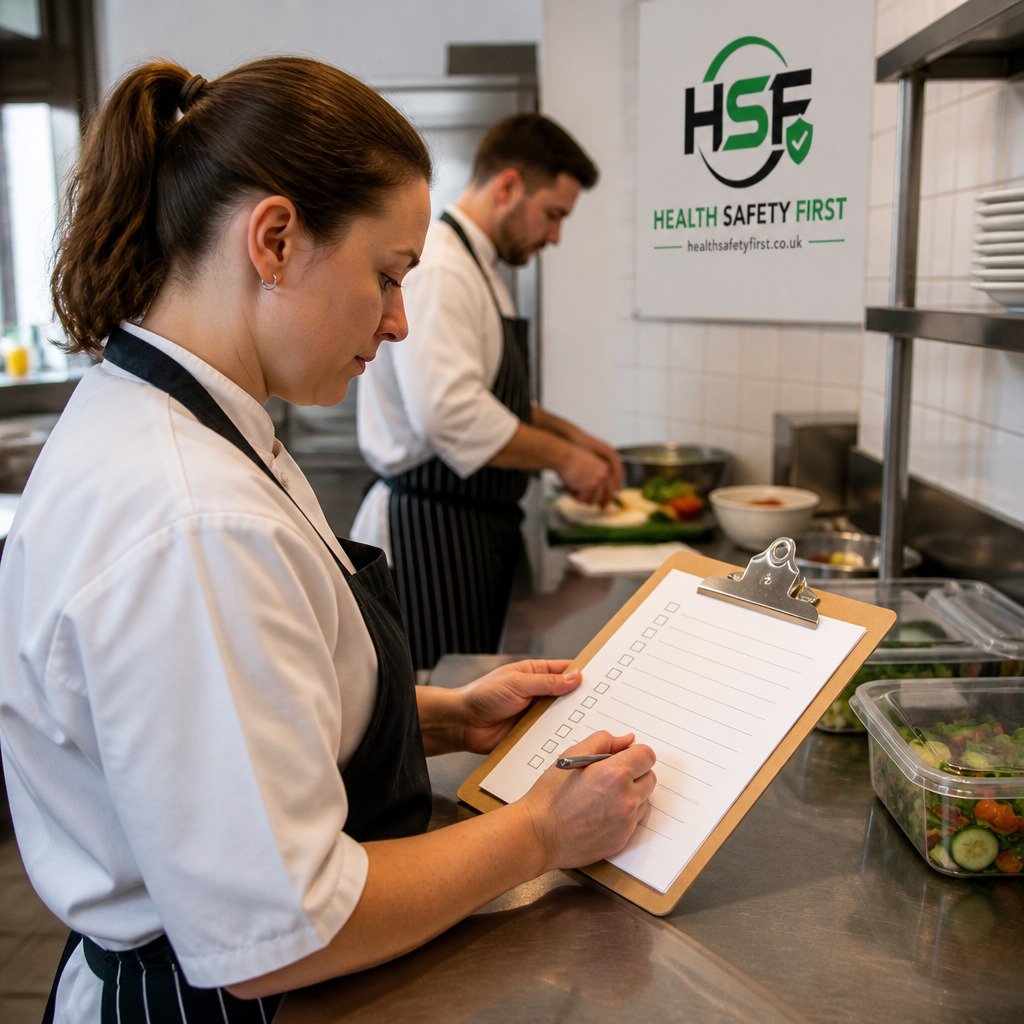
Use this checklist to review food labelling and allergen procedures:
| Task | Action | Status |
|---|---|---|
| Identify all PPDS products | List every food you package and sell directly | ✓ |
| Check supplier labels | Verify ingredients and allergens on all bought-in items | ✓ |
| Create labelling template | Design a consistent format with all required fields | ✓ |
| List all 14 allergens | Ensure your template covers all major allergens | ✓ |
| Highlight allergens | Make allergen information stand out on labels | ✓ |
| Include business details | Add your name and address to every label | ✓ |
| Train staff on allergens | Run a training session on the 14 major allergens | ✓ |
| Train staff on labelling | Show staff how to use your template correctly | ✓ |
| Train staff on cross-contamination | Teach staff how to prevent allergen transfer | ✓ |
| Review recipes | Check every recipe for hidden allergens | ✓ |
| Document procedures | Write down your allergen and labelling procedures | ✓ |
| Label all PPDS items | Ensure every packaged food has a label | ✓ |
| Review supplier changes | Update labels if a supplier changes an ingredient | ✓ |
| Keep training records | Document all staff training dates and attendees | ✓ |
| Inspect labels regularly | Check that labels are legible and attached securely | ✓ |
Prevent Allergen Cross Contamination in Your Kitchen

Work through this checklist as a team. Assign responsibility for each task, who will manage labelling, who will train staff, who will review supplier changes.
Implementing your compliance system today
You can begin reviewing your food labelling and allergen procedures today.
You could begin by listing products your business packages and sells, then check official guidance to determine which fall within PPDS requirements.
You could review supplier information for ingredients used in your products and organise the information for reference.
If you use a labelling template, check official guidance for the information and format required.
You could brief your team on allergen information, labelling, and cross-contamination procedures.
Check official guidance to determine which products require labels and what information they must carry.
Food Allergen Checklist for Restaurants: A 2026 Guide
Review product information when recipes or suppliers change, and brief new staff on relevant procedures.
Food labelling and allergen procedures are important considerations for food businesses. Check official guidance for the requirements that apply to your products.
Small food businesses may need to consider allergen requirements. UK Health, Safety & Fire Guide provides a resource for navigating health, safety, and fire standards. Check official guidance for current food labelling requirements.
Frequently Asked Questions
What does Natasha's Law require small food businesses to do?
Check official guidance to determine which food falls within PPDS requirements and what labelling and record-keeping obligations apply.
What information must a PPDS allergen label template include?
Check official guidance for the information and format required on PPDS labels.
Does Natasha's Law apply to food prepared and sold on the same premises?
Check official guidance to determine whether food prepared and sold on the same premises falls within PPDS requirements and what labelling obligations apply.
How can staff check that PPDS labels are accurate before food is sold?
Staff can review product information and labels before sale. Check official guidance for applicable labelling and record-keeping requirements.