 ultimate-guide
HSE Fire Safety: A Guide for Hospitality Businesses
Table of Contents
- Understanding HSE Fire Safety in Hospitality
- Workplace Fire Risk Assessment: The Foundation of Compliance
- Fire Evacuation Plan Template and Fire Safety Training for Employees
- Frequently Asked Questions
Last Updated: October 19, 2026
Understanding HSE Fire Safety in Hospitality
HSE fire safety is the framework of duties, risk assessments and protective measures hospitality businesses must maintain to protect staff and guests, enforced by local fire and rescue authorities and the Health and Safety Executive. This guide covers the three areas that decide an inspection: risk assessment, evacuation planning and staff training.
Two points catch most independent operators out: duties sit with the "responsible person", not whoever is on shift, and risk must be managed proportionately. The Regulatory Reform (Fire Safety) Order 2005 sets the legal baseline for most premises.
Workplace Fire Risk Assessment: The Foundation of Compliance
A workplace fire risk assessment documents what could start a fire, who is at risk, and what you have done to reduce that risk, covering ignition sources, fuel sources, people at risk, existing controls and actions with named owners and deadlines. Review it whenever layout, equipment or occupancy changes, a refit or new menu line can invalidate an assessment that was sound six months earlier, so treat it as live, not filed.
Fire Evacuation Plan Template and Fire Safety Training for Employees
All premises need a written evacuation plan any member of staff can follow under pressure, naming who does what, where people assemble, and how you account for unfamiliar guests. Starting template: Alarm signal; Roles (named person for calling emergency services, named person for sweep checks); Routes (primary and secondary escapes, marked on a floor plan); Assembly point; Vulnerable people; Roll call; Equipment (extinguisher locations and fire classes); Review date.
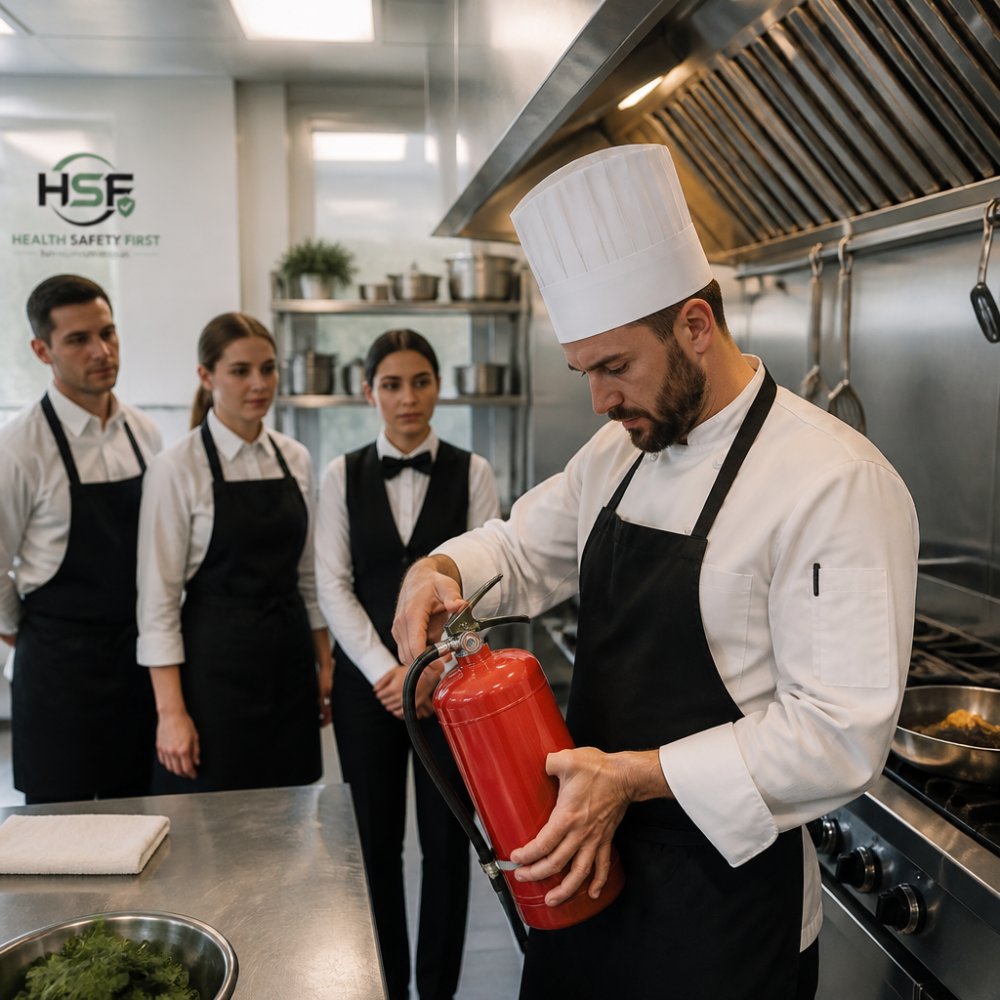
Fire safety training for employees should cover induction-level basics for everyone and hands-on extinguisher use for designated staff. Record who attended and when, inspectors ask for training records first.
Kitchen Fire Prevention: Protecting Your Business
Kitchen fire prevention comes down to three habits: keeping extraction hoods and ducting clean, controlling oil and fat storage and disposal, and never leaving cooking unattended. Grease builds in ducting where nobody looks, turning a small pan fire into a building fire, so book professional cleaning on a schedule and keep the certificates.
For the wider legal picture, the Health and Safety Executive guidance on fire safety and your local fire and rescue authority's business safety pages are the sources to check. Our own UK Health, Safety & Fire Guide resources summarise the duties in plain terms.
| Task | Frequency | Owner |
|---|---|---|
| Visual check of extinguishers and exits | Weekly | Duty manager |
| Review of risk assessment | Annually or after any change | Responsible person |
| Extraction duct cleaning | On a scheduled basis | Contractor |
| Evacuation drill and training record | At planned intervals | Responsible person |
| Full fire safety documentation audit | Annually | Owner or GM |
Frequently Asked Questions
What does HSE say about fire safety?
The Health and Safety Executive (HSE) enforces fire safety legislation in most workplaces, though fire and rescue authorities lead on enforcement in many premises. HSE provides guidance on risk assessments and safe systems of work. For hospitality businesses, you must comply with the Regulatory Reform (Fire Safety) Order 2005, conduct regular fire risk assessments, and ensure staff are trained. HSE fire safety advice emphasises preventing fires, protecting people, and having clear evacuation procedures. Always check the latest official guidance.
Who is responsible for fire safety in a workplace?
The responsible person is typically the employer, or the person who has control of the premises (such as a facilities manager or owner). In a café or restaurant, this is usually the owner or manager. They must carry out a fire risk assessment, implement safety measures, and ensure staff receive fire safety training. This includes maintaining fire alarms, extinguishers, and clear escape routes. Failure to meet these duties can lead to enforcement action and fines.
How do you carry out a fire risk assessment for a restaurant?
Start by identifying fire hazards such as cooking equipment, electrical appliances, and flammable materials. Then identify people at risk, including staff and customers. Evaluate the risks and remove or reduce them where possible, for example by regular cleaning of extraction hoods and safe storage of oils. Record your findings, create an emergency plan, and review regularly. Use a workplace fire risk assessment template to ensure you cover all areas. Keep records for inspection.
Fire safety compliance is not a document you file once; it is a routine your team runs every week. UK Health, Safety & Fire Guide gives independent cafés, restaurants and hotels a direct, plain-English route through those duties, with checklists your supervisors can actually use on the floor and guidance kept current as regulations change. Get started with UK Health, Safety & Fire Guide and give your team a compliance routine that holds up on inspection day.