 blog
Food Allergen Labelling Rules for Cafés
Table of Contents
- Food Allergen Labelling Rules for Cafés: What You Must Know
- Food Allergen Menu Requirements and Disclosure
- Creating an Allergen Matrix for Cafés
- Frequently Asked Questions
Last Updated: 19 October 2026
Food Allergen Labelling Rules for Cafés: What You Must Know
Understanding food allergen labelling rules for cafes in the UK is essential, as they are not optional. They're a legal requirement that protects your customers and your business. At UK Health, Safety & Fire Guide, we help business owners and managers in the e-commerce and retail sectors understand exactly what they need to do to stay compliant.
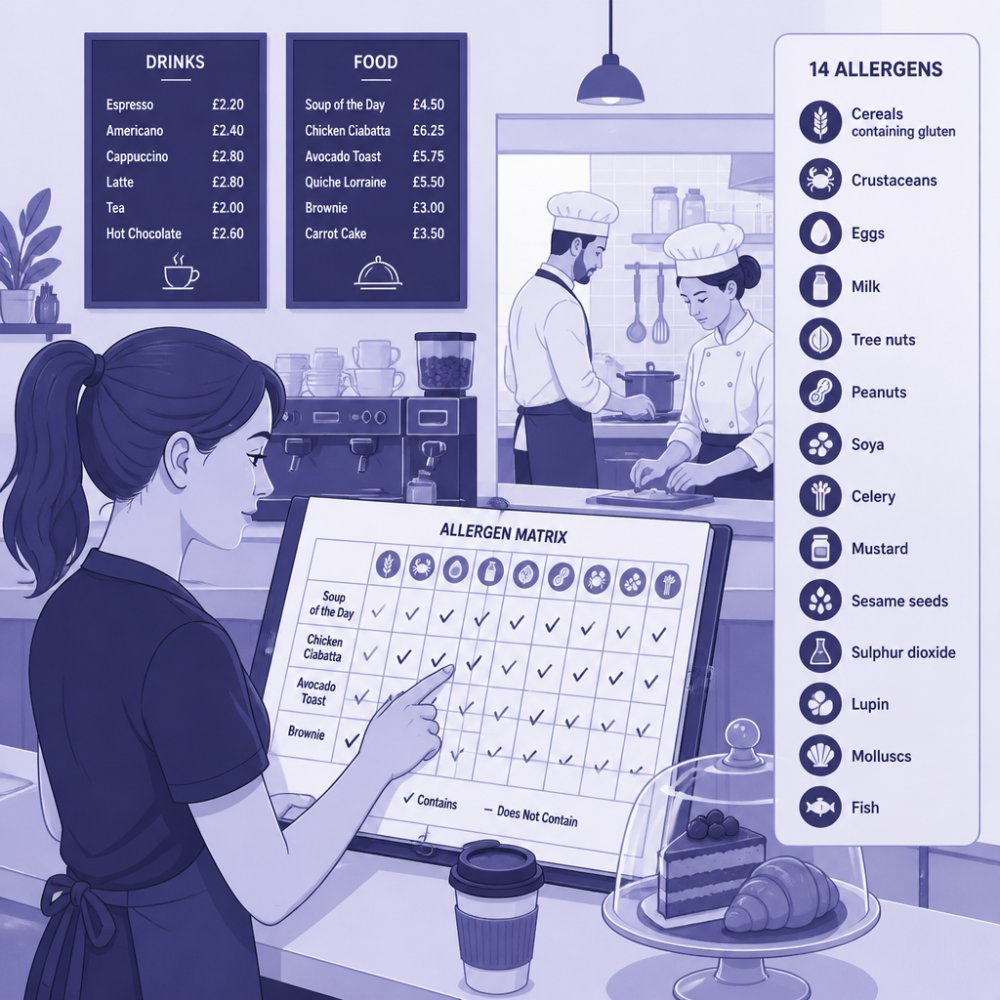
The rules exist because allergic reactions can be serious. Some can be life-threatening. Your café must make allergen information clear and accessible to every customer who asks. This guide covers what you need to know to get it right.
According to the UK Food Standards Agency's allergen guidance, food businesses must provide allergen information for all food sold. The rules apply whether you're serving prepacked items, freshly prepared meals, or both.
Food Allergen Menu Requirements and Disclosure
Your menu must clearly identify which of the 14 major allergens are in each item. The 14 allergens are:
- Celery
- Cereals containing gluten
- Crustaceans
- Eggs
- Fish
- Lupin
- Milk
- Molluscs
- Mustard
- Nuts (peanuts and tree nuts)
- Sesame
- Soya
- Sulphites
- Sulphur dioxide
To comply with food allergen labelling rules for cafes in the UK, every café needs a system for displaying this information. Some use symbols on menus. Others print allergen lists next to food descriptions. The method doesn't matter, clarity does.
Staff must be trained to answer allergen questions accurately (Allergen information for non-prepacked foods). If a customer asks whether a dish contains nuts, your team needs to know. Guessing is dangerous. If you're unsure, tell the customer you'll check or that you cannot guarantee the item is safe for them.
For prepacked for direct sale allergen labelling, the rules are stricter. Items you package yourself and sell directly must have a label showing the allergen information. This applies to sandwiches, cakes, salads, and any other food you wrap or box for takeaway.
The Food Information to Consumers Regulation requires that allergen information be easily visible and legible. Small print tucked away doesn't meet the standard. Your customers should be able to find it without asking.
Creating an Allergen Matrix for Cafés
An allergen matrix is a table showing which allergens are in each menu item. It's one of the clearest ways to meet your legal obligation.
Set up a simple spreadsheet or printed chart. List every item you serve down the left side. Across the top, list the 14 allergens. Mark which allergens appear in each dish.
Include items made in-house and any prepacked products you sell. If you use supplier ingredients, get allergen information from them in writing. Don't rely on memory or assumptions.
Update your matrix whenever your menu changes or you switch suppliers. Keep it accessible to staff. Train everyone on how to use it and how to explain it to customers.
Many cafés post their allergen matrix behind the counter or on a website. Some print it on the back of menus. Choose a method your customers can access easily.
Frequently Asked Questions
What allergen information must a café provide to customers?
Cafés must provide information about the 14 major allergens: celery, cereals containing gluten, crustaceans, eggs, fish, lupin, milk, molluscs, mustard, nuts, peanuts, sesame, sulphites, and soya. This information must be available for all food and drink sold, whether prepared on-site or pre-prepared. You can provide this through menus, allergen matrices, labels, or verbally if staff are trained and can access detailed ingredient information immediately.
Do cafés need to label prepacked for direct sale items differently?
Yes. Prepacked for direct sale allergen labelling requires the 14 major allergens to be highlighted on the label itself, typically in bold or a contrasting colour. Unlike products sold through retail, you cannot rely on verbal disclosure alone for prepacked items. The allergen information must be clearly visible on the packaging before the customer purchases it.
What should an allergen matrix for cafés include?
An allergen matrix for cafés should list all menu items in rows and the 14 major allergens in columns, with clear indicators (such as a tick or cross) showing which allergens are present in each dish. Include notes about cross-contamination risks during preparation. The matrix must be accessible to staff and customers, either printed on menus, displayed at the counter, or available on request. Keep it updated whenever recipes or ingredients change.
Protecting your customers from allergen risks protects your business from liability. UK Health, Safety & Fire Guide provides the compliance guidance you need to manage this safely. Get access to our full resource on food safety and allergen management to ensure your café meets every legal requirement.