 how-to
Food Safety Regulations UK: A How-To Guide
Table of Contents
- Understanding Food Safety Regulations in the UK
- Food Business Registration and Legal Requirements
- Implementing Food Safety Management Procedures
- Frequently Asked Questions
Last Updated: 21 October 2026
Understanding Food Safety Regulations in the UK
Food safety regulations in the UK protect public health, covering everything from food storage to allergen handling. The Food Standards Agency (FSA) sets the framework and your local council enforces it; breaching food safety regulations in the UK can mean fines, closure orders, or prosecution. Small cafés follow the same core rules as large chains.
Food Business Registration and Legal Requirements
You must register your food business with your local council at least 28 days before opening, a legal requirement under food safety regulations in the UK. Registration is free and online, and you must notify the council within 10 working days of moving premises or changing what you do.
Beyond registration, know your legal obligations:
- Food hygiene certificate: Level 2 minimum for food handlers
- Allergen procedures: Written procedures for the 14 major allergens
- Temperature logs: Records of safe storage and cooking temperatures
- Traceability systems: Track food from supplier to customer
- Cleaning schedules: Documented cleaning and pest control
Food Standards Agency registration guidance explains the process step by step. Registration happens through your local council's website, search "[your council name] food business registration" to find the link.
Implementing Food Safety Management Procedures
A food safety management system is your written plan for identifying and controlling hazards, HACCP, which the FSA now calls a "food safety management procedure".
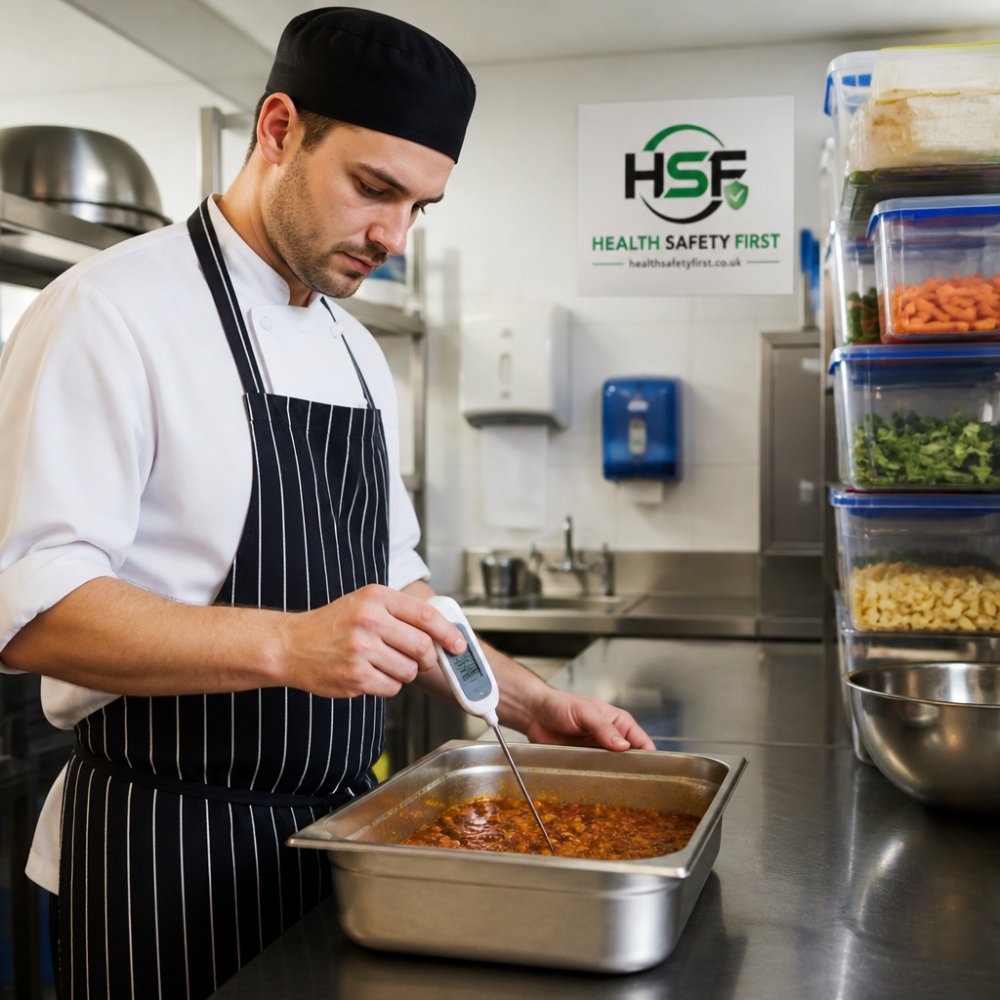
Your system must document hazards, control points (cooking temperature, chilling time), monitoring, corrective actions, and who is responsible for each task. A one-page document works for small businesses; use FSA food safety management guidance as your template, but it must be specific to your business, a generic template copied from online will not satisfy inspectors. Train your team on the procedures, keep training records, and make it part of new-staff induction.
Temperature control is your most critical control point: cook food to safe temperatures and keep it chilled below 8°C or hot above 63°C, logging fridge and freezer temperatures daily. Allergen management requires written procedures too, train staff on which allergens are in your dishes, provide allergen information to customers on request, and keep ingredient lists or supplier data to back up your claims. FSA allergen labelling rules sets out your exact obligations.
Frequently Asked Questions
What are the main food safety regulations I need to follow?
The primary legislation governing food safety regulations in the UK is the Food Safety Act 1990 and the Food Standards Act 1999. Food businesses must comply with hygiene standards set out in retained EU law, including rules on temperature control, cross-contamination prevention, and staff training. Your local authority environmental health department enforces these standards and carries out inspections. The specific requirements depend on your business type and the foods you handle.
How do I register my food business?
You must register your food business with your local authority's environmental health department at least 28 days before opening. Registration is free and can usually be done online through your local council's website. You'll need to provide details about your premises, the food activities you undertake, and the types of food you handle. Even home-based food businesses must register unless you operate under specific exemptions. Failure to register is a criminal offence.
What should be included in my food safety checklist?
A comprehensive food safety checklist should cover temperature monitoring (refrigeration and cooking temperatures), cleaning and sanitising schedules, pest control measures, staff hygiene practices, allergen labelling, and supplier checks. Include daily opening and closing checks, weekly deep-cleaning schedules, and records of food deliveries. Document all checks in writing, environmental health officers expect to see evidence of your food safety checklist during inspections. Keep records for at least two years.
Food safety regulations in the UK protect your customers and your business. Compliance starts with registration, continues with documented procedures, and depends on consistent staff training. The UK Health, Safety & Fire Guide provides templates and checklists to help you meet these obligations without guesswork. Start with registration, build your food safety management system, and train your team. Inspections become straightforward when your systems are in place.