 blog
Food Allergen Checklist for Restaurants: A 2026 Guide
Last Updated: October 23, 2026
Quick Summary
A food allergen checklist for restaurants documents what allergens are in your food, how they're stored, and how cross-contamination is prevented. It's your foundation for legal compliance and customer safety, transforming allergen management from guesswork into documented, repeatable processes.
- UK food law requires you to declare 14 major allergens including celery, gluten, crustaceans, eggs, fish, milk, nuts, peanuts, sesame and soya.
- Get allergen declarations from suppliers in writing and store these documents safely for at least two years.
- Assign a staff member to complete daily pre-service allergen checks before each shift, initialling and dating the checklist.
- Train all new staff on the 14 major allergens, your allergen matrix, cross-contamination risks and how to respond to customer allergen questions.
- Keep separate storage areas, chopping boards and utensils for allergen-free prep to prevent cross-contamination in the kitchen.
Table of Contents
- Why Your Restaurant Needs a Food Allergen Checklist
- Building Your Food Allergen Matrix Template
- Essential Allergen Checklist for Food Businesses
- Food Allergen Cross-Contamination Checklist
- Restaurant Food Allergy Staff Training
- Record-Keeping and Documentation
- Frequently Asked Questions
Why Your Restaurant Needs a Food Allergen Checklist
Allergen management isn't optional anymore. It's a legal requirement and a matter of customer safety. Every restaurant, café, and catering business in the UK must keep detailed allergen information available to customers. The regulations require you to know exactly what's in every dish and how it's prepared.
A food allergen checklist for restaurants is your foundation for compliance and protection. It documents what allergens are in your food, how they're stored, and how cross-contamination is prevented. Without one, you're operating blind.
The real risk isn't just fines. It's a customer with a severe allergy ordering a dish they think is safe, and your staff not knowing the actual ingredients. That's a medical emergency. It's also grounds for serious liability.
Most restaurants start with good intentions but skip the documentation step. They know what's in their dishes, or think they do. Then a staff member leaves. A new supplier changes an ingredient. Suddenly, nobody's certain. A food allergen checklist prevents that chaos.
Building Your Food Allergen Matrix Template
Your allergen matrix is the core document that tracks every allergen in every dish you serve. It's not a one-time task. It's a living system that changes when your menu changes or suppliers change.
Identifying All Allergens in Your Dishes
Start by listing the 14 major allergens you must declare under UK food law:
- Celery
- Cereals containing gluten (wheat, barley, oats, rye)
- Crustaceans (prawns, crab, lobster)
- Eggs
- Fish
- Lupin
- Milk
- Molluscs (mussels, oysters, squid)
- Mustard
- Nuts (almonds, hazelnuts, walnuts, cashews, pecans, pistachios, Brazil nuts, macadamia)
- Peanuts
- Sesame
- Soya
- Sulphites
Go through each dish on your menu. Write down every ingredient. Check the labels on everything you buy. Many processed ingredients hide allergens. Breadcrumbs might contain gluten. Stock cubes might contain celery. Sauces often contain nuts or sesame.
:::pro tip Don't rely on memory. Write everything down. Even if you've made the same dish for years, document it. Staff change. Recipes drift. Written records are your protection.
Create columns for each allergen. Mark which ones are present in each dish. Be thorough. If there's any doubt, mark it as present. It's better to over-declare than under-declare.
Documenting Supplier Information
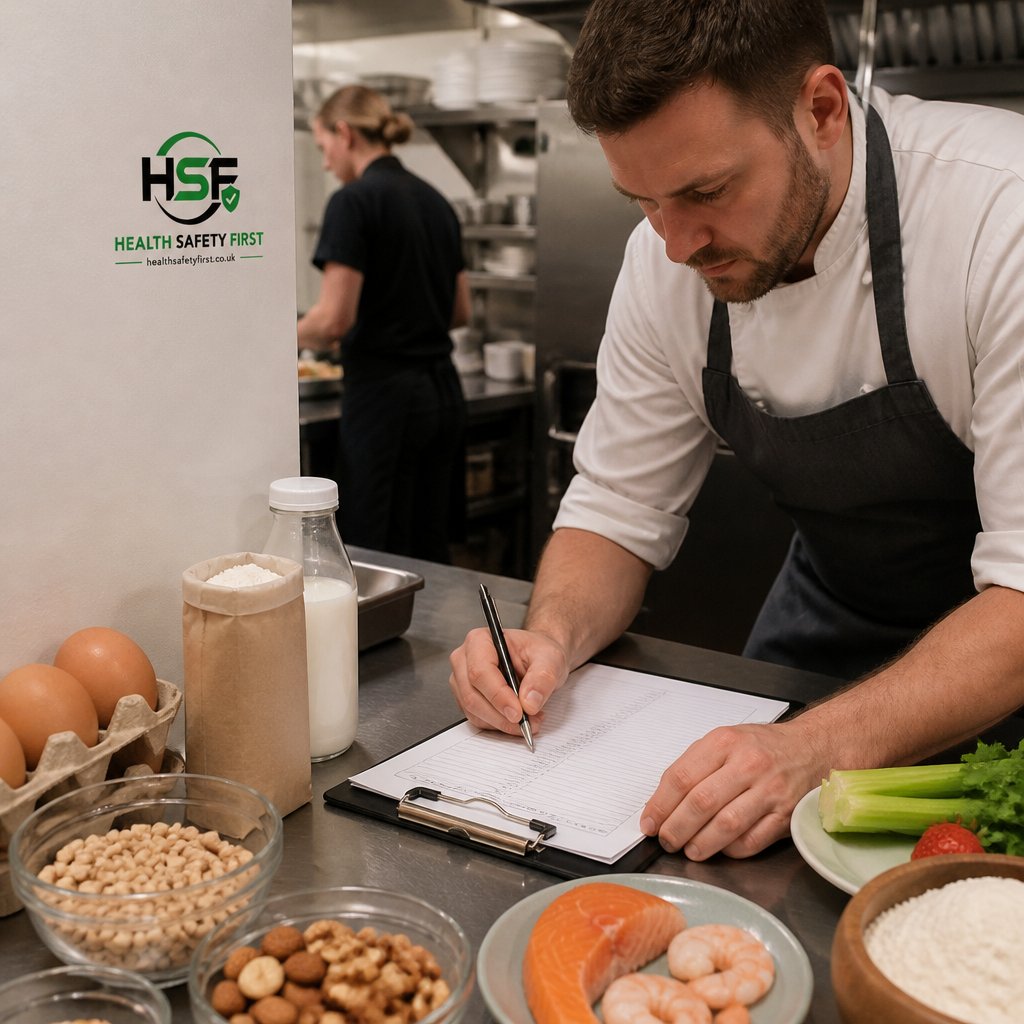
You need to know what your suppliers tell you about allergens. Get allergen declarations from every supplier in writing. Don't accept verbal assurances.
Create a supplier allergen record that includes:
- Supplier name and contact details
- Products they supply
- Allergen information they've provided
- Date you received the information
- Any changes they've notified you of
When a supplier changes an ingredient, they should tell you. Make sure your system captures that change. Update your allergen matrix immediately.
Store these supplier documents safely. Keep them for at least two years. You'll need them if there's an issue or an inspection.
Essential Allergen Checklist for Food Businesses
This is the daily operational checklist. It keeps allergen management running smoothly and catches problems before they reach customers.
Daily Pre-Service Checks
Before service starts, check these points:
- All allergen labels are visible on storage containers
- Allergen-free items are stored separately from allergen-containing items
- Equipment used for allergen-free prep is clean and ready
- Staff on duty today understand which dishes contain which allergens
- Allergen information is accessible at the counter or on tables
- Any new staff have been briefed on allergen procedures
Make this a five-minute task. Assign it to one person each shift. They initial and date it. This creates accountability and a paper trail.
Ingredient Change Protocol
When an ingredient changes, follow this process:
- Receive notification from supplier (or discover it yourself)
- Identify which dishes are affected
- Check if the new ingredient introduces new allergens
- Update your allergen matrix
- Brief all kitchen and front-of-house staff
- Update customer-facing allergen information
- Document the date and what changed
- Keep the old matrix for your records
Don't wait. Don't assume it's fine. Do this before the new ingredient goes into service. A gap of even a few hours is a risk.
Food Allergen Cross-Contamination Checklist
Cross-contamination happens when an allergen moves from one food to another. It can happen through shared equipment, shared utensils, or even airborne particles (peanut dust, for example). Your food allergen checklist must address this.
Kitchen Separation and Storage
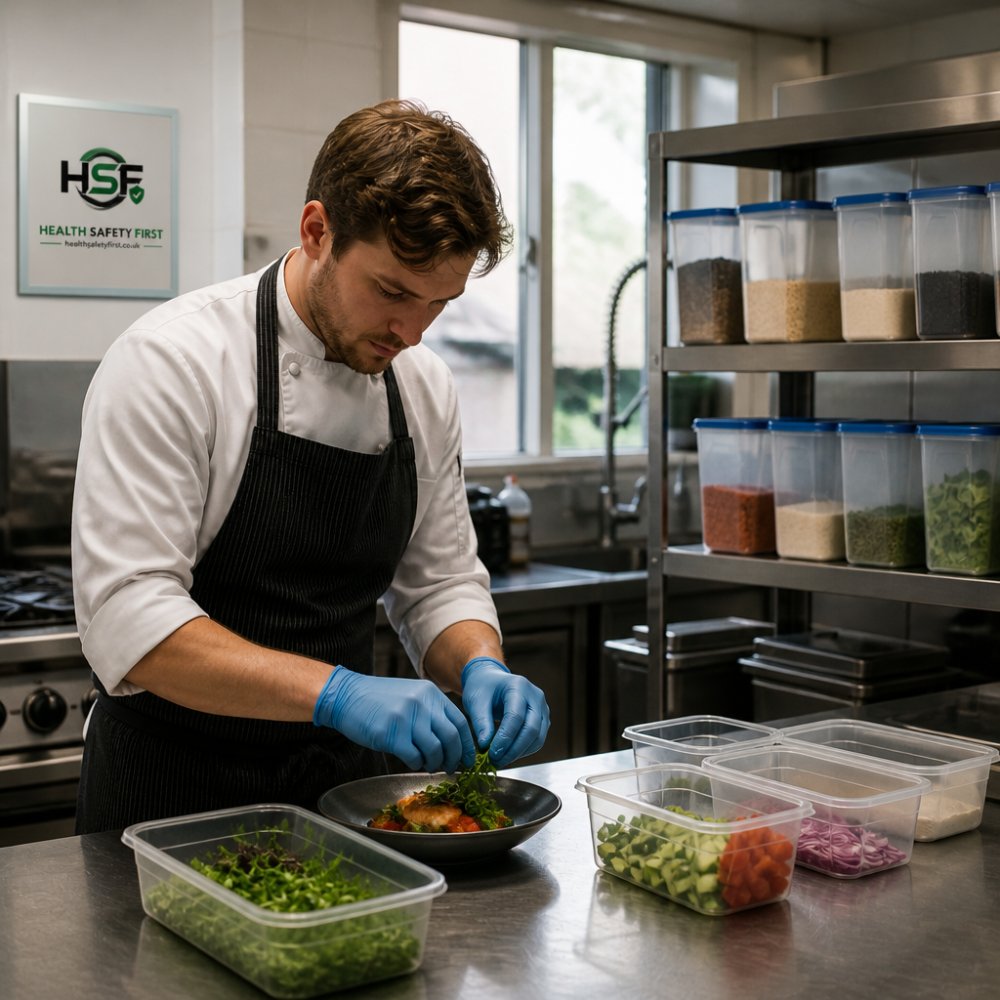
Allergen-containing ingredients need physical separation from allergen-free items. This means:
- Dedicated storage areas for common allergens (nuts, shellfish, milk products)
- Clear labelling on all allergen-containing items
- Separate chopping boards and utensils for allergen-free prep
- Separate preparation areas if possible, or clearly defined time slots
- Hand washing between handling different allergens
- No cross-contact between raw allergen-containing foods and ready-to-eat items
If you have a customer ordering an allergen-free meal, prepare it first, before handling other ingredients. This reduces the risk of contamination.
Equipment and Utensil Management
Your equipment needs a cleaning schedule. Different allergens require different approaches:
- Wash all equipment thoroughly after each use
- Some allergens (nuts, sesame) are sticky and require extra attention
- Use hot water and appropriate detergent
- Air dry or use clean cloths only
- For high-risk allergens, consider dedicated equipment if possible
- Deep clean equipment weekly
Document your cleaning. Write down what was cleaned, when, and by whom. This shows you're taking it seriously and protects you if there's a problem.
Restaurant Food Allergy Staff Training
Your staff are the front line of allergen management. They need to understand the risks and know the procedures.
Initial Training Requirements
Every new staff member needs training before they handle food or speak to customers about allergens. Training should cover:
- The 14 major allergens and why they matter
- How to read your allergen matrix
- Cross-contamination risks and how to prevent them
- How to respond when a customer asks about allergens
- What to do if they're unsure about an ingredient
- The legal requirement to provide accurate information
- What happens if allergen information is wrong
Make it practical. Show them the allergen matrix. Walk them through a real dish. Let them ask questions. Don't assume they understand. Test their knowledge.
:::pro tip Refresher training every six months keeps allergen awareness high. People forget. New staff join. Menu items change. Regular training keeps everyone on the same page.
Front-of-House and Customer Communication
Your front-of-house staff need clear guidance on what to say when customers ask about allergens:
- Never guess. If you don't know, ask the kitchen
- Never say "it should be fine" or "probably doesn't have nuts"
- Always confirm with the kitchen before confirming with the customer
- If there's any doubt, tell the customer the dish isn't suitable
- Document any allergen questions and how they were answered
Train staff to take allergen requests seriously. A customer mentioning an allergy isn't being difficult. They're protecting their health. Treat it that way.
Some customers will have severe allergies. They might ask detailed questions. They might want to speak to a manager. Have a process for this. Don't make them feel rushed or questioned.
Record-Keeping and Documentation
Your records are your proof that you took allergen management seriously. They're also your protection if something goes wrong.
Keep these documents:
- Your allergen matrix (current version and historical versions)
- Supplier allergen declarations
- Daily pre-service checklists
- Equipment cleaning logs
- Staff training records and dates
- Any customer allergen enquiries and how they were handled
- Changes to your menu or ingredients
- Any incidents or complaints related to allergens
Store everything safely. Keep it for at least two years. Make it easy to retrieve if you need it quickly.
An allergen checklist isn't paperwork for its own sake. It's a system that keeps customers safe and keeps your business compliant. Restaurants that do this well don't panic during inspections. They know their allergen information is accurate and documented.
Your restaurant's allergen management system is only as good as the people running it and the documentation backing it up. A food allergen checklist for restaurants transforms this from something that happens by accident into something that happens by design. Customers with allergies deserve to eat safely. Your staff deserve clear procedures. Your business deserves protection. Build your checklist now, before an incident forces your hand. The Food Standards Agency guidance on allergen labelling provides the regulatory framework you need to follow. Start there, then document your own processes on top of it.
Frequently Asked Questions
What should a food allergen checklist for a restaurant include?
Your food allergen checklist must cover ingredient sourcing and supplier information, daily pre-service checks, cross-contamination prevention measures, staff training records, and customer communication protocols. It should identify the 14 major allergens (cereals containing gluten, crustaceans, eggs, fish, peanuts, tree nuts, milk, celery, mustard, sesame, sulphites, lupin, molluscs, and soya), document how each is stored and prepared, and establish procedures for handling customer allergy requests. Keep records of all menu changes and ingredient updates.
How can restaurant staff prevent allergen cross-contamination?
Implement strict separation of allergen-containing ingredients from allergen-free items using dedicated storage areas, chopping boards, and utensils. Train staff to wash hands thoroughly before handling allergen-free dishes and to clean surfaces between different food preparations. Use colour-coded equipment where possible and establish a rule that staff must never assume an ingredient is allergen-free. Document your food allergen cross-contamination checklist and review it during every shift briefing to keep prevention top-of-mind.
How often should restaurant staff receive allergen training?
Staff should receive comprehensive allergen training when they start employment and refresher training at least annually. Additional training is essential whenever you change suppliers, introduce new menu items, or update your allergen procedures. Consider monthly toolbox talks or brief pre-shift reminders about allergen risks. Document all training sessions with dates, attendees, and topics covered to demonstrate compliance if inspected.
What records should restaurants keep for allergen management?
Maintain a food allergen matrix template showing all dishes and their allergen content, supplier declarations for all ingredients, staff training records with dates and names, incident reports if an allergen mix-up occurs, and documentation of any customer allergy requests and how they were handled. Keep records of menu changes, ingredient substitutions, and equipment cleaning logs. Retain these documents for at least two years and make them available to environmental health officers during inspections.